
Camelback East Village Lawn Edging Services
Choose our Lawn Edging for precise, professional borders that enhance curb appeal, prevent grass overgrowth, and give your landscape a polished, well-maintained look all year round.
Get a Free QuoteOur Camelback East Village Landscaping & Yard Care Services
When to Schedule Lawn Edging in Camelback East Village, Arizona – Seasonal Guide
In Camelback East Village, Arizona, the best times to schedule lawn edging are typically in early spring and late fall. These periods align with the region’s mild temperatures and reduced risk of extreme heat, making it easier to achieve crisp, clean edges without stressing your turf. Neighborhoods near the Arizona Canal and around Piestewa Peak often experience microclimates, so it’s important to consider your specific location when planning lawn maintenance.
Local environmental factors such as the area’s alkaline soil, sporadic rainfall, and the potential for drought conditions can all impact the timing and frequency of lawn edging. Properties with dense shade from mature trees, like those found in the Arcadia neighborhood, may require different scheduling compared to homes with full sun exposure. Additionally, municipal guidelines and seasonal water restrictions—often updated on the city’s official website—should be reviewed before booking services.
Local Factors to Consider for Lawn Edging in Camelback East Village
- Tree density and shade coverage, especially in established neighborhoods
- Soil type and drainage, which can vary between canal-side and hillside properties
- Seasonal precipitation patterns and drought risk
- Proximity to landmarks like Piestewa Peak or the Arizona Canal
- Municipal restrictions on water usage and landscaping activities
- Terrain variations, including sloped yards and rocky soil
Benefits of Lawn Edging in Camelback East Village
Enhanced Curb Appeal
Professional-Grade Precision
Weed and Grass Control
Low Maintenance Solutions
Custom Design Options
Long-Lasting Results
Camelback East Village Lawn Edging Types

Brick Lawn Edging
-
Metal Landscape Edging
-
Plastic Lawn Borders
-
Natural Stone Edging
-
Concrete Curb Edging
-
Wood Landscape Borders
-
Rubber Lawn Edging
Our Lawn Edging Process
Site Evaluation
Marking Edges
Cutting the Edge
Debris Removal
Final Inspection
Why Choose Camelback East Village Landscape Services
-
Camelback East Village Homeowners Trust Us
-
Expert Lawn Maintenance
-
Reliable Irrigation Solutions
-
Competitive Pricing
-
Professional Team
-
Satisfaction Guarantee
-
Personalized Service
Coordinating Lawn Edging Services with Camelback East Village's Municipal Departments
Lawn edging in Camelback East Village generates clippings, soil debris, and organic material that must be managed in accordance with City of Phoenix municipal operations. Because Camelback East Village is an urban village within Phoenix, residents and property managers should coordinate edging debris disposal through the city's bulk collection and green waste programs. Edging along curb lines, sidewalks, and driveways produces material that can migrate into storm drains and street gutters if not promptly collected. The Phoenix Public Works Department oversees curbside green waste pickup and can confirm current collection schedules and accepted material types for residential properties.
- Sweep or vacuum all edging debris from curb gutters, sidewalks, and hardscape surfaces immediately after service
- Bag or containerize green waste clippings according to current city collection guidelines
- Avoid blowing or washing edging debris into street inlets, retention basins, or drainage channels
- Verify bulk pickup scheduling for larger volumes of accumulated turf and soil material
Phoenix Public Works Department
200 W. Washington St., Phoenix, AZ 85003
Official Website: Phoenix Public Works Department
For properties adjacent to public rights-of-way or engineered drainage corridors, edging work that alters grade or disturbs curb-adjacent soil may require coordination with the city's engineering division. The Phoenix City Engineer can clarify whether proposed edging modifications near public infrastructure trigger any review requirements.
How Camelback East Village's Desert Heat and Alkaline Soils Affect Lawn Edging
Camelback East Village sits within the Phoenix metro low desert, classified under USDA Hardiness Zone 10a–10b, where summer temperatures routinely exceed 110°F and soils are predominantly alkaline sandy loam with subsurface caliche layers. These conditions directly influence how lawn edging is performed and how turf edges respond to mechanical cutting.
- Soil hardness: Caliche and compacted decomposed granite beneath turf borders resist blade penetration, requiring equipment calibration and sometimes pre-watering to soften the edge zone before cutting
- Reflected heat: Concrete driveways, block walls, and decorative pavers radiate heat that desiccates turf margins, causing edges to brown and recede faster than interior lawn areas
- Irrigation overspray: Bermudagrass and overseeded ryegrass lawns in Camelback East Village depend on regular irrigation, and edging along hardscape must account for overspray that deposits mineral salts on walkways and curbs
- Monsoon runoff: During July through September monsoon storms, poorly maintained lawn edges can channel sediment-laden runoff into adjacent hardscape, storm drains, and retention basins
The University of Arizona Cooperative Extension provides region-specific guidance on bermudagrass management that applies directly to edge maintenance in low-elevation Arizona communities.
Navigating Camelback East Village's Stormwater and Property Maintenance Regulations for Lawn Edging
Lawn edging in Camelback East Village falls under several regulatory frameworks that property owners and service providers should understand. The City of Phoenix enforces property maintenance standards that include keeping turf borders clean and preventing vegetation from encroaching onto public sidewalks, curb faces, and street surfaces. Failure to maintain clear edges along public walkways may result in code compliance action.
- Edging debris, soil, and clippings must not enter the municipal storm sewer system, consistent with Arizona DEQ stormwater requirements and the federal Clean Water Act
- Properties near washes or flood-control channels should ensure edging operations do not destabilize adjacent banks or introduce organic material into drainage corridors
- Commercial lawn edging operators using motorized equipment should verify compliance with City of Phoenix noise ordinance provisions regarding hours of operation in residential areas
Phoenix City Engineer
200 W. Washington St., Phoenix, AZ 85003
Official Website: Phoenix City Engineer
The Arizona Department of Water Resources also provides landscaping conservation guidance relevant to properties where edging intersects with irrigation system boundaries, particularly where turf-to-xeriscape transitions require defined separation lines.
Timing and Methods for Professional Lawn Edging in Camelback East Village's Climate
Professional lawn edging in Camelback East Village must be timed around the region's extreme seasonal conditions and the growth cycles of locally dominant turf species. Bermudagrass, the primary warm-season turf throughout the area, enters active growth from April through October and requires the most frequent edging during this period. Winter overseeded ryegrass, common on many Camelback East Village properties, demands edging attention from November through March. The Turfgrass Maintenance Guide for Low Elevation Arizona provides detailed seasonal management calendars applicable to this area.
- Spring through early summer (April–June): Edge bermudagrass borders every one to two weeks as stolon growth accelerates along sidewalks, driveways, and planting beds
- Monsoon season (July–September): Schedule edging before anticipated storm events to prevent loose debris from washing into curb inlets; avoid edging on saturated soil to prevent turf tearing
- Fall transition (October–November): Reduce edging frequency as bermudagrass growth slows; re-establish clean edges after overseeding to define turf boundaries
- Winter (December–March): Maintain ryegrass edges at moderate intervals, typically every two to three weeks, adjusting for growth rate and irrigation schedule
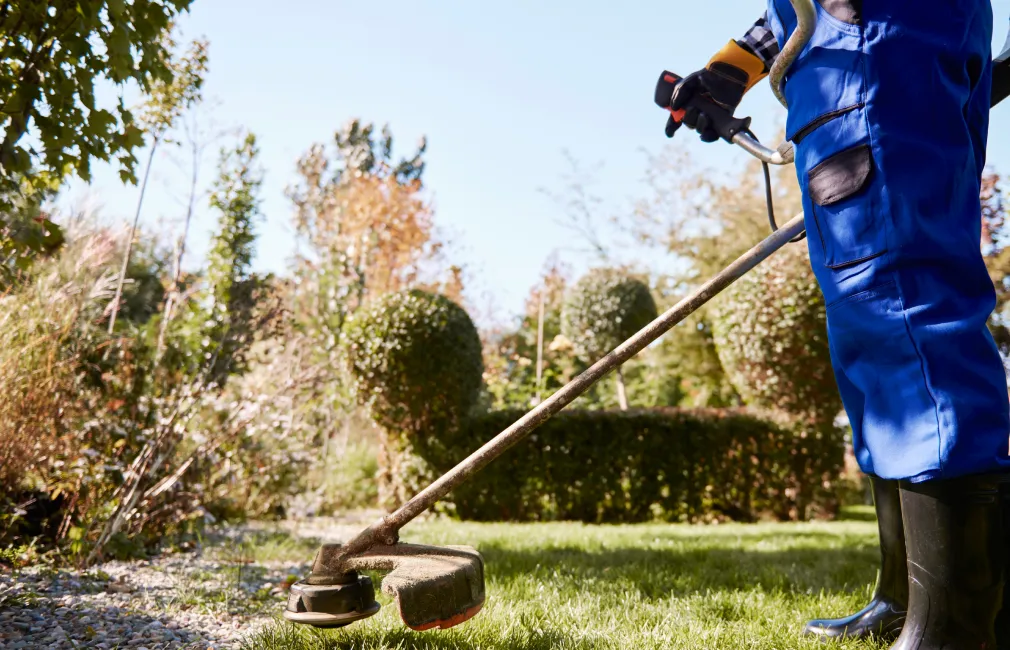
- Use vertical-blade edgers along hardscape for clean, defined cuts; string trimmers may be used for bed borders but produce less precise results
- Set edging depth to approximately one to two inches to sever lateral stolons without damaging irrigation lines or subsurface drip tubing
What Neighborhoods Do We Serve Throughout Camelback East Village, AZ?
- Arcadia: Established lots with mature citrus trees and large irrigated bermudagrass lawns require frequent edging along older concrete walkways and block-wall borders where stolon encroachment is common
- Biltmore Area: Properties near the Arizona Biltmore feature manicured turf with extensive hardscape adjacency, demanding precise edging along decorative pavers, curbing, and resort-adjacent frontages
- Camelback Corridor: Mixed residential and commercial frontages along Camelback Road present edging challenges where turf borders meet high-traffic sidewalks and commercial parking areas
- Paradise Valley Adjacent (South Slopes): Hillside and slope-adjacent properties near Camelback Mountain require careful edging to prevent soil displacement and runoff into natural drainage paths
- Cheery Lynn: Older residential blocks with established irrigation systems and traditional lawn layouts benefit from consistent edge maintenance along aging curb lines and narrow parkway strips
- Whitton Place: Mid-century homes with compact front yards and close hardscape proximity require edging that accounts for shallow irrigation lines and reflected heat from adjacent driveways